Best Glass Containers for Terrariums: A Buyer's Guide
From mason jars to geometric terrariums, learn which containers work best for different terrarium styles and budgets.
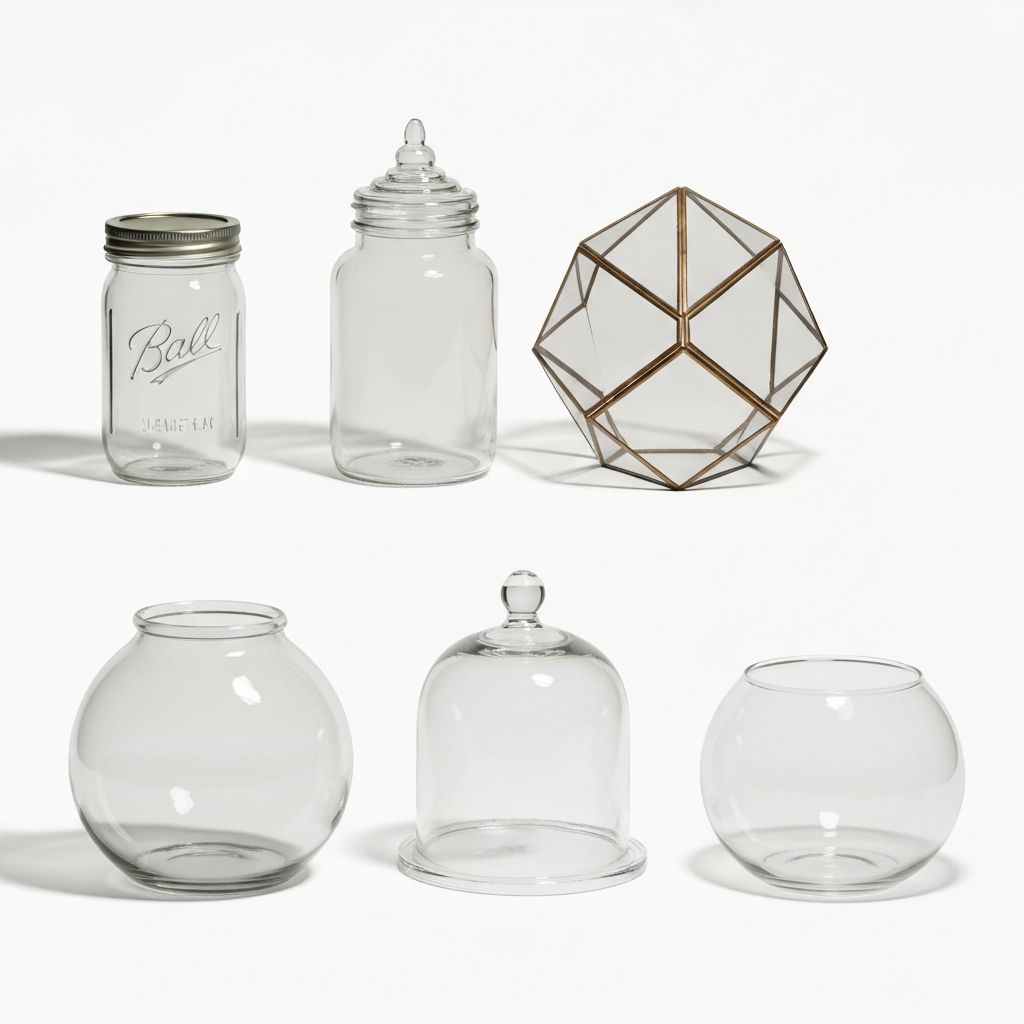
The container you choose determines not only how your terrarium looks but how it functions. Size, shape, opening type, and glass quality all affect plant health and maintenance difficulty. This guide helps you match the right container to your terrarium goals.
Container Types
Mason Jars
Best for: Beginners, budget builds, closed tropical terrariums
Pros:
- Inexpensive and widely available
- Airtight seal with standard lids
- Various sizes from mini to large
- Easy to find at thrift stores
Cons:
- Narrow openings make planting difficult
- Utilitarian appearance
- Limited viewing angles
Ideal plants: Moss, small fittonia, mini ferns
Mason jars are perfect for learning. If you make mistakes, you've lost minimal investment.
Apothecary Jars
Best for: Decorative closed terrariums, display pieces
Pros:
- Elegant appearance
- Lid removes completely for easy access
- Wide openings for planting
- Clear glass shows plants well
Cons:
- More expensive than mason jars
- Glass can be thin on cheap versions
- Lid seal may not be perfectly airtight
Ideal plants: Fittonia, peperomia, small ferns, moss
Apothecary jars balance aesthetics with functionality. They're the most popular choice for gift terrariums.
Geometric Terrariums
Best for: Open terrariums, succulents, modern decor
Pros:
- Striking visual design
- Available in many shapes
- Often have openings or no lid
- Work well with air plants
Cons:
- Seams may leak in closed setups
- Angles can create light hot spots
- Harder to clean
- Some shapes waste space
Ideal plants: Succulents, air plants, cacti
The angular designs complement modern interiors but require plants that tolerate lower humidity.
Wardian Cases
Best for: Serious hobbyists, large displays, Victorian aesthetic
Pros:
- Classic terrarium design
- Excellent ventilation control
- Large planting area
- Historical significance
Cons:
- Expensive
- Heavy
- Requires more space
- Can be hard to find quality versions
Ideal plants: Ferns, orchids, larger tropical plants
Wardian cases are investment pieces. They're beautiful but not necessary for beginners.
Fish Bowls and Aquariums
Best for: Large terrariums, woodland scenes, complex ecosystems
Pros:
- Wide openings for easy planting
- Thick, durable glass
- Various sizes readily available
- Flat viewing surface
Cons:
- No lid (need to source separately or leave open)
- Can be heavy
- Less decorative than specialty containers
Ideal plants: Larger ferns, multiple plant varieties, moss landscapes
Fish tanks work well for ambitious projects where you need space to create detailed scenes.
Cloche and Bell Jars
Best for: Display terrariums, single plant features
Pros:
- Elegant presentation
- Easy access (lift off)
- Clear 360-degree viewing
- Various sizes
Cons:
- Need separate base/tray
- Seal depends on base fit
- Top-heavy, can tip
- Limited planting depth
Ideal plants: Single specimen displays, moss mounds
Cloches create museum-quality displays but work better for simpler compositions.
Bottles and Demijohns
Best for: Challenge projects, conversation pieces
Pros:
- Unique appearance
- Creates self-sustaining environment
- Long-lasting once established
- Vintage bottles have character
Cons:
- Extremely difficult to plant
- Requires special long tools
- Hard to maintain or adjust
- Limited plant choices
Ideal plants: Moss, selaginella, very small ferns
Bottle gardens are projects for experienced builders. The narrow neck requires patience and specialized techniques.
Size Considerations
Small (Under 1 Quart)
Good for:
- Single plants or moss
- Desktop decorations
- Gifts
- Learning the basics
Challenges:
- Less stable environment
- Quick to dry out if open
- Limited plant choices
Medium (1-3 Quarts)
Good for:
- 2-4 small plants
- Creating simple scenes
- Balance of size and manageability
- Most common terrarium size
Challenges:
- Requires some planning
- Needs proper layering
Large (Over 3 Quarts)
Good for:
- Complex ecosystems
- Multiple plant varieties
- Bioactive setups with springtails
- Statement pieces
Challenges:
- Heavy when planted
- Requires more materials
- Can be overwhelming for beginners
Opening Size Matters
The opening determines how easy your terrarium is to plant and maintain.
Wide Opening (4+ inches)
Advantages:
- Easy to plant and arrange
- Simple maintenance access
- Can use regular tools
Best for: Beginners, anyone who wants to rearrange regularly
Medium Opening (2-4 inches)
Advantages:
- Balances access with seal quality
- Most common configuration
- Adequate for most plants
Best for: Standard terrarium projects
Narrow Opening (Under 2 inches)
Advantages:
- Excellent seal for humidity
- Creates more challenge (if desired)
- Better for fully self-sustaining builds
Best for: Moss-only builds, experienced builders
Glass Quality
Clear vs. Tinted
Clear glass allows maximum light penetration. Tinted or colored glass reduces light and can create color casts that affect plant growth.
Always choose clear glass for best plant health.
Thick vs. Thin
Thicker glass:
- More durable
- Better insulation (more stable temperature)
- Heavier
- More expensive
Thin glass:
- Lighter and cheaper
- More fragile
- Less temperature stability
- More common in decorative containers
For long-term terrariums, thicker glass is worth the investment.
Bubbles and Distortion
Handblown or recycled glass may have bubbles or distortion. These don't affect function but change aesthetics. Some people prefer the character; others want perfect clarity.
Where to Buy
Budget Sources
- Thrift stores (best value)
- Dollar stores (small containers)
- IKEA (clean, modern options)
- Target/Walmart (seasonal)
- Garage sales
Mid-Range
- Amazon (huge selection)
- Etsy (handmade options)
- Craft stores (Michael's, Joann)
- Home goods stores (HomeGoods, TJ Maxx)
Premium
- Specialty terrarium shops
- Antique stores (vintage pieces)
- Artisan glassblowers
- Import shops
Preparing Containers
Before use:
- Clean thoroughly - Wash with mild soap, rinse completely
- Check for cracks - Inspect seams and stress points
- Test seal - If closed terrarium, ensure lid fits
- Dry completely - Any cleaning moisture should evaporate
Never use containers that previously held chemicals, even if cleaned.
Matching Container to Style
| Terrarium Style | Best Container | Why | |----------------|----------------|-----| | Tropical closed | Apothecary jar | Good seal, easy access | | Desert/succulent | Geometric | Open design, modern look | | Moss garden | Wide jar or cloche | Shows texture well | | Woodland scene | Fish tank | Space for multiple elements | | Gift terrarium | Mason jar | Budget-friendly, easy to transport | | Statement piece | Wardian case | Impressive appearance |
Final Thoughts
Start with what you have. A repurposed jar from your kitchen works fine while you learn. As your skills develop, invest in containers that match your aesthetic preferences and the terrarium styles you enjoy most.
The best container is one you enjoy looking at and can maintain comfortably. Everything else is secondary.
Tags
Written by
Sarah Chen
A contributing writer at Terrarium Guide. Our team is dedicated to providing well-researched, accurate, and helpful content to our readers.
Learn more about our teamRelated Articles
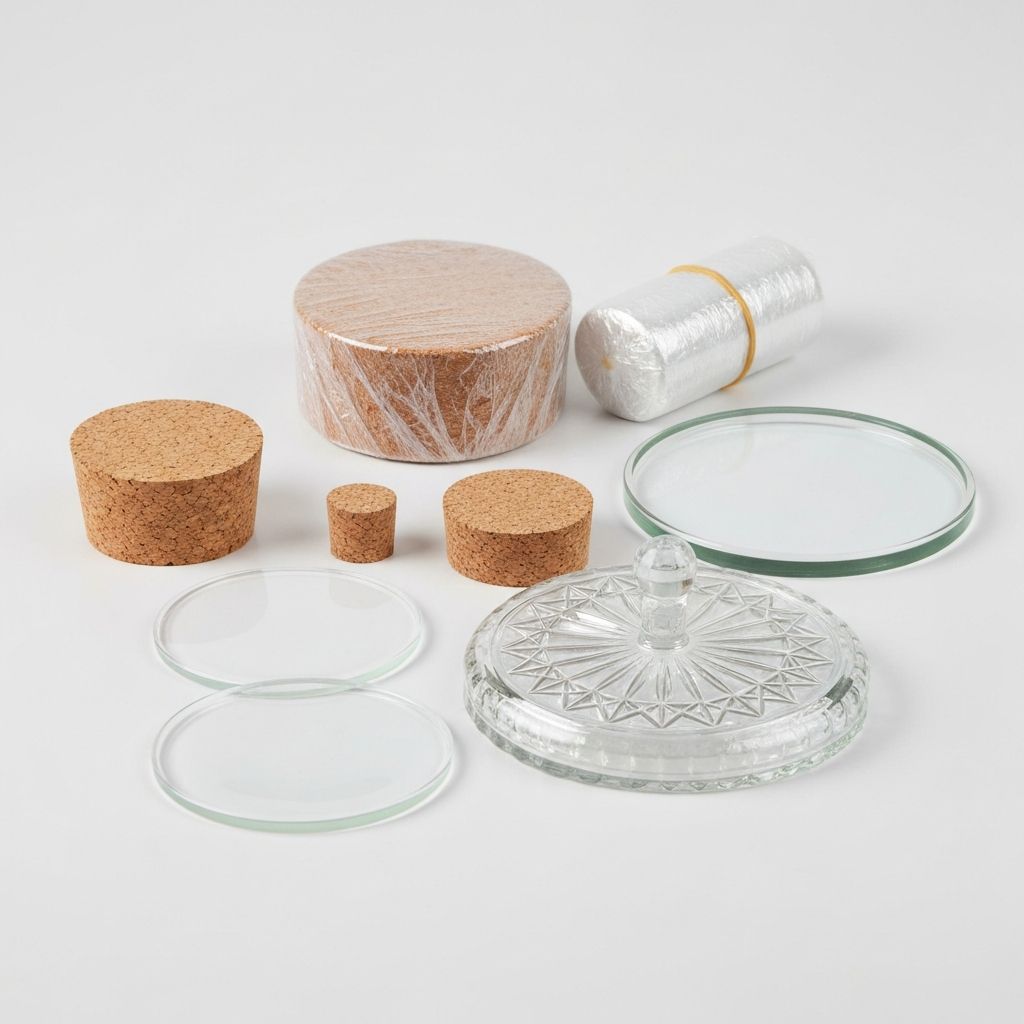
DIY Terrarium Lid Solutions for Any Container
Turn any glass container into a terrarium with these creative lid solutions. From cork to custom-cut glass, find the perfect closure for your build.
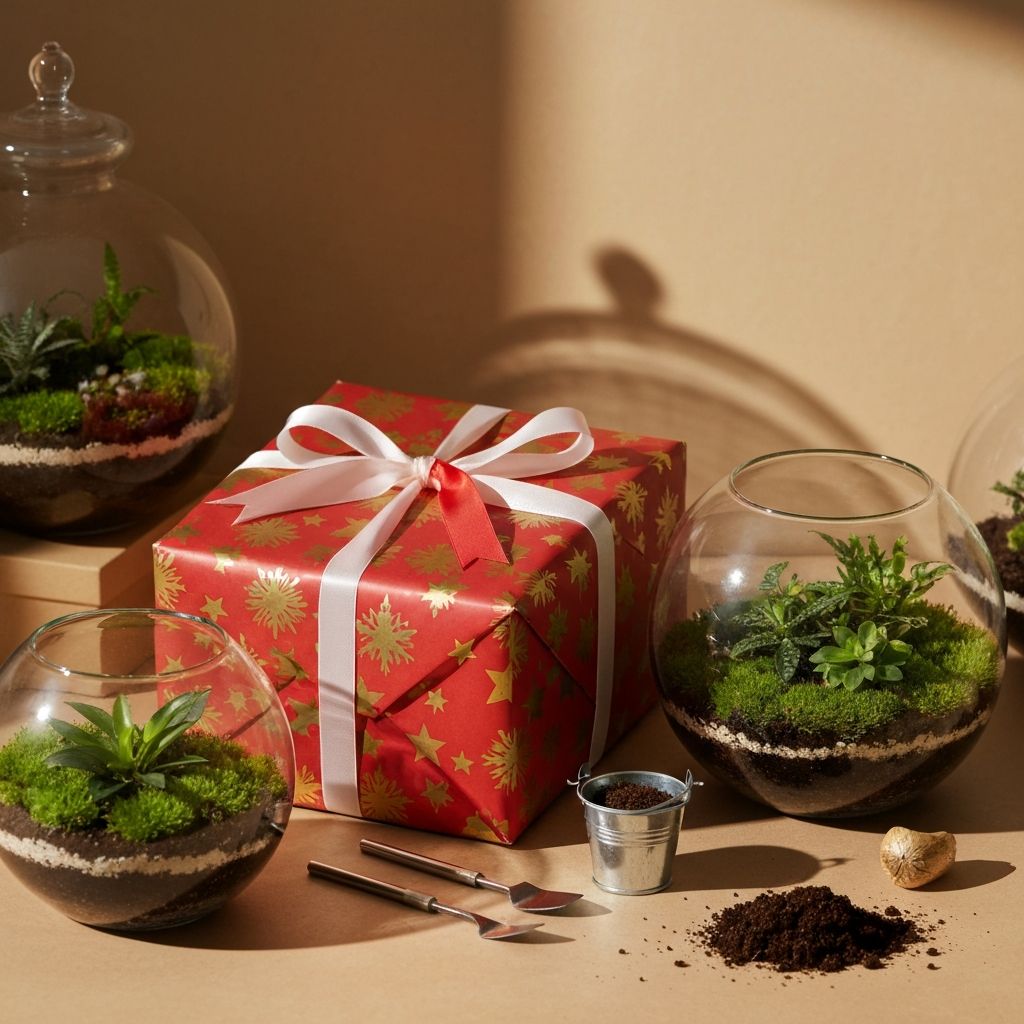
Terrarium Gift Guide: Kits, Supplies, and Ready-Made Options
Looking for the perfect terrarium gift? From beginner kits to premium supplies, find options for every budget and skill level.
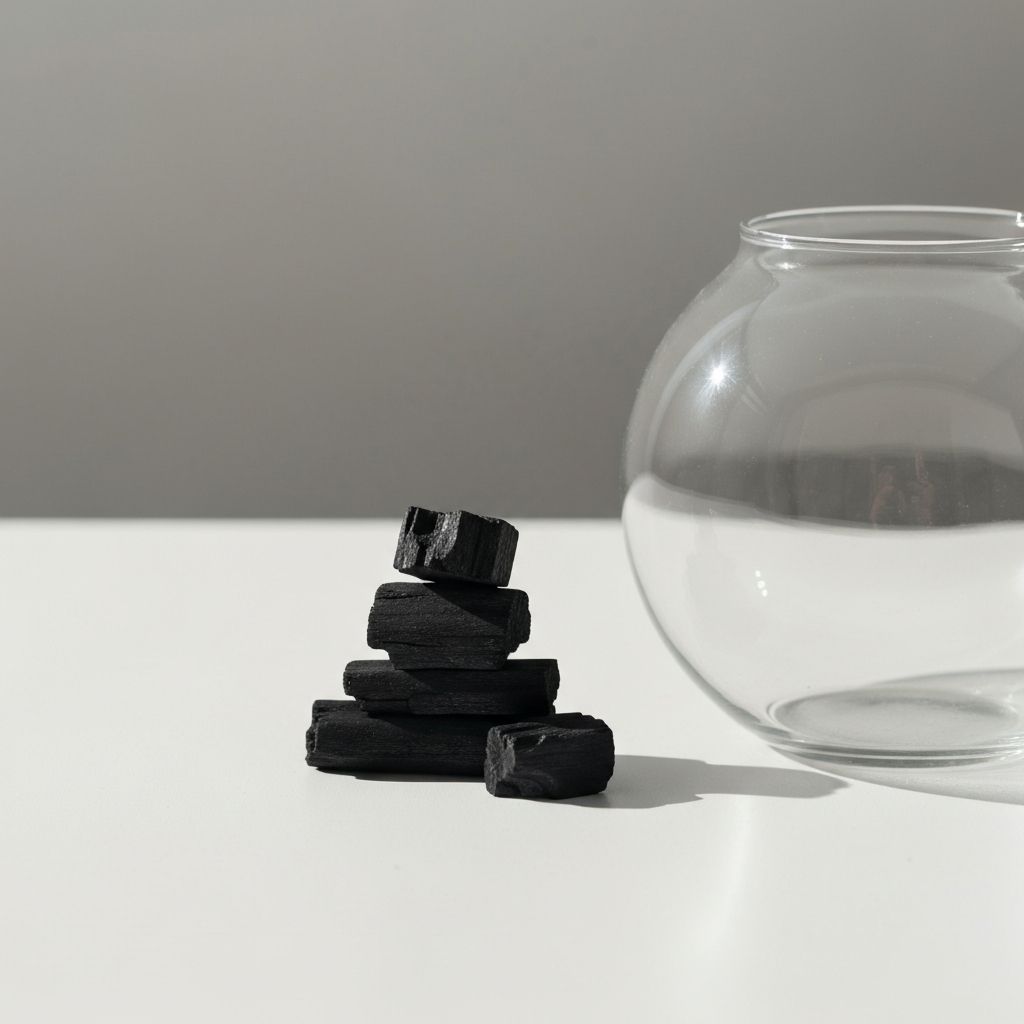
Activated Charcoal in Terrariums: Essential or Optional?
Understand the role of activated charcoal in terrarium substrate, when you actually need it, and alternatives if you don't have it.