Fittonia Care Guide: Growing Nerve Plants in Terrariums
Everything you need to know about growing fittonia (nerve plants) in terrariums, including variety selection, care requirements, and troubleshooting common problems.
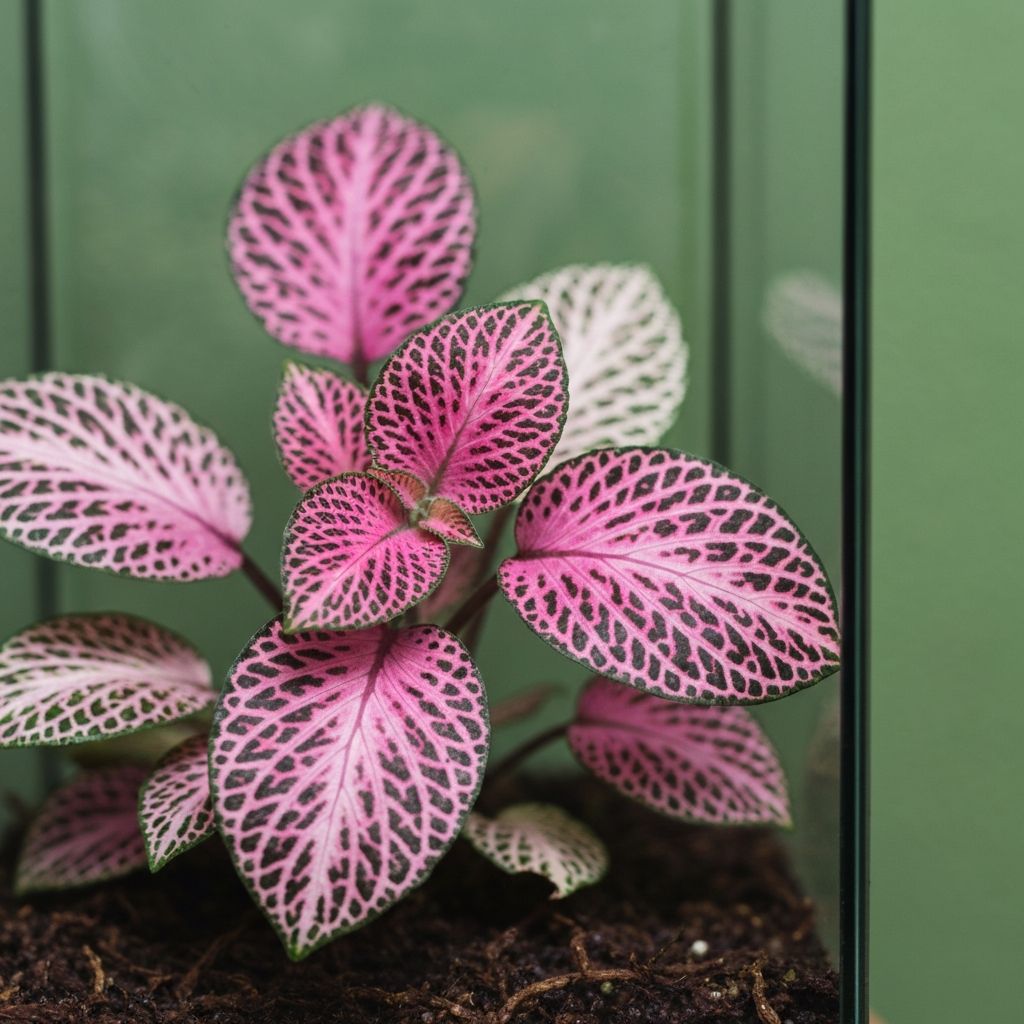
Fittonia, commonly called nerve plant or mosaic plant, is arguably the perfect terrarium plant. Its colorful veined leaves add visual interest, it stays compact, and it thrives in the humid conditions that terrariums provide. Outside a terrarium, fittonia is notoriously dramatic and difficult. Inside one, it's nearly foolproof.
Why Fittonia Loves Terrariums
In its native South American rainforest floor habitat, fittonia grows in warm, humid, shaded conditions. These are exactly the conditions a closed terrarium provides. The plant evolved for terrarium life before terrariums existed.
Outside terrariums, fittonia throws theatrical tantrums when humidity drops. Leaves droop dramatically, edges crisp, and the plant generally makes its displeasure known. In a terrarium's consistent humidity, these problems disappear.
Fittonia Varieties
All fittonia varieties work well in terrariums. Selection comes down to color preference and size.
By Color
White-veined (Fittonia albivenis) The classic variety with bright white veins on dark green leaves. Creates strong contrast and brightens shaded terrariums.
Pink-veined (Fittonia 'Pink Angel', 'Frankie') Pink to red veins ranging from soft blush to vivid magenta. The most popular color for decorative terrariums.
Red-veined (Fittonia 'Red Anne', 'Ruby Red') Deep red to burgundy veins on darker green leaves. Creates a moody, dramatic appearance.
Green-on-green Subtle light green veins on dark green leaves. More natural looking, blends well with moss.
By Size
Standard varieties Leaves reach 2-4 inches and plants spread 6-12 inches. Work best in medium to large terrariums.
Mini varieties ('Mini White', 'Mini Superba') Leaves stay under 1 inch with compact growth. Perfect for small containers and fairy gardens.
Optimal Growing Conditions
Light
Fittonia needs low to medium indirect light. In practice, this means:
- Near a north-facing window: excellent
- 3-6 feet from east/west windows: good
- Under artificial grow lights (low setting): good
- Direct sunlight: avoid (causes leaf burn)
In too little light, variegation fades and stems stretch. In too much light, leaves develop brown patches and colors wash out.
Humidity
Ideal humidity: 70-90%
A sealed terrarium naturally maintains this range. In open terrariums or containers with poor seals, you may need to mist regularly.
Signs of low humidity:
- Drooping leaves (dramatic but recovers quickly when misted)
- Crispy leaf edges
- Slow or stunted growth
Temperature
Fittonia prefers 65-80°F (18-27°C). Avoid:
- Cold drafts from windows or AC
- Heat sources like radiators
- Temperature swings greater than 15 degrees
Most room temperatures work fine. Problems arise near exterior windows in winter or in direct sun that heats the terrarium.
Soil
Use standard terrarium soil mix:
- 2 parts peat or coco coir potting mix
- 1 part perlite
- Slightly acidic to neutral pH (6.0-7.0)
Fittonia isn't fussy about soil as long as it drains well and retains some moisture.
Planting Fittonia in Terrariums
Preparation
Before planting:
- Remove fittonia from nursery pot
- Gently shake off excess soil
- Untangle roots if root-bound
- Trim any dead or damaged leaves
Placement
Consider fittonia's growth habit when positioning:
- Stems spread horizontally and root at nodes
- Plants fill in around themselves over time
- Leave 2-3 inches between fittonia and other plants
Position fittonia:
- In the foreground or midground
- Away from direct contact with glass (causes leaf rot)
- Where colorful leaves will be visible
Planting Depth
Plant at the same depth as the nursery pot. Burying stems too deep encourages rot. Leaving roots exposed causes drying.
Ongoing Care
Watering
In sealed terrariums, watering is minimal after initial setup. The water cycle maintains itself.
Signs you need to add water:
- No condensation on glass for several days
- Soil surface looks and feels dry
- Leaves appear less vibrant
When watering, add small amounts. A tablespoon at a time is often sufficient. Overwatering is the most common cause of fittonia death in terrariums.
Pruning
Fittonia benefits from regular pinching:
- Pinch stem tips to encourage bushier growth
- Remove leggy stems that stretch toward light
- Trim stems that press against glass
Pruning redirects energy to new growth and keeps plants compact. The cuttings can be used to propagate new plants.
Fertilizing
In terrariums, fertilize sparingly or not at all. The decomposing organic matter in the terrarium provides nutrients.
If growth seems slow after a year:
- Use diluted liquid fertilizer (1/4 strength)
- Apply once in spring
- Avoid fertilizer on leaves
Over-fertilizing causes salt buildup and root burn.
Propagation
Fittonia propagates easily from stem cuttings.
Water Propagation
- Cut a stem with 2-3 nodes
- Remove lower leaves
- Place in water with nodes submerged
- Wait 2-3 weeks for roots to develop
- Plant when roots reach 1 inch
Direct Soil Propagation
- Cut a stem with 2-3 nodes
- Remove lower leaves
- Plant directly in moist terrarium soil
- Keep humidity high
- New growth indicates rooting success
Division
Larger fittonia plants can be divided:
- Remove entire plant from terrarium
- Gently separate at natural divisions
- Each division needs roots and stems
- Replant divisions separately
Common Problems
Drooping Leaves
Cause: Usually low humidity or underwatering.
Solution: In a sealed terrarium, check the seal. If open, mist the plant and increase humidity. Leaves typically recover within hours.
Note: Dramatic drooping is normal fittonia behavior, not necessarily a crisis.
Yellow Leaves
Cause: Overwatering, poor drainage, or natural leaf aging.
Solution: Check soil moisture. If soggy, improve ventilation and reduce watering. Old leaves naturally yellow and can be removed.
Brown Leaf Edges
Cause: Low humidity, salt buildup from fertilizer, or water quality issues.
Solution: Increase humidity. If you've been fertilizing, flush soil with distilled water. Switch to filtered or distilled water for misting.
Leggy Growth
Cause: Insufficient light causing stems to stretch.
Solution: Move to brighter indirect light. Pinch leggy stems to encourage bushier growth.
Loss of Variegation
Cause: Too little light.
Solution: Gradually increase light levels. New growth should show better coloring.
Pest Problems
Fittonia in terrariums rarely has pest issues. If pests appear:
- Fungus gnats: Usually indicates overwatering. Let soil dry more between watering.
- Mealybugs: Remove manually with cotton swab dipped in rubbing alcohol.
- Spider mites: Rare in high humidity. Increase humidity and wash leaves.
Companion Plants
Fittonia pairs well with:
- Moss: Ground cover around fittonia creates forest floor effect
- Small ferns: Similar conditions, contrasting texture
- Peperomia: Complementary humidity needs, different leaf shapes
- Pilea: Interesting leaf shapes that contrast with fittonia
- Selaginella: Delicate texture at fittonia's base
Avoid pairing with succulents or plants needing dry conditions.
Design Ideas
Rainbow Terrarium
Plant multiple fittonia colors together:
- White in back (brightest)
- Pink in middle
- Red in front (darkest)
The gradient creates depth and visual interest.
Moss and Fittonia Landscape
Combine one fittonia variety with multiple moss types:
- Sheet moss ground cover
- Mood moss mounds
- Fittonia as the "tree" or focal point
Miniature Forest
Use mini fittonia varieties with:
- Twigs as "trees"
- Mini ferns as understory
- Moss as forest floor
Final Thoughts
Fittonia is forgiving in terrariums while being finicky everywhere else. If you struggle to keep houseplants alive, a fittonia terrarium might change your perspective. The sealed environment handles the humidity demands, leaving you to simply enjoy one of nature's most colorful foliage plants.
Start with one variety, learn its habits, then experiment with the full rainbow of available colors.
Tags
Written by
Sarah Chen
A contributing writer at Terrarium Guide. Our team is dedicated to providing well-researched, accurate, and helpful content to our readers.
Learn more about our teamRelated Articles

The 8 Best Ferns for Terrariums: A Complete Species Guide
Discover which fern species thrive in terrarium environments. Learn about size, care requirements, and placement tips for maidenhair, button, lemon button, and other terrarium-friendly ferns.
Miniature Begonias for Terrariums: A Complete Guide
Discover the best miniature and small begonia species for terrariums, including care requirements, propagation tips, and design ideas.
Peperomia Varieties Perfect for Terrariums
Discover the best compact peperomia species for terrariums, including care requirements, growth habits, and styling tips.