Peperomia Varieties Perfect for Terrariums
Discover the best compact peperomia species for terrariums, including care requirements, growth habits, and styling tips.
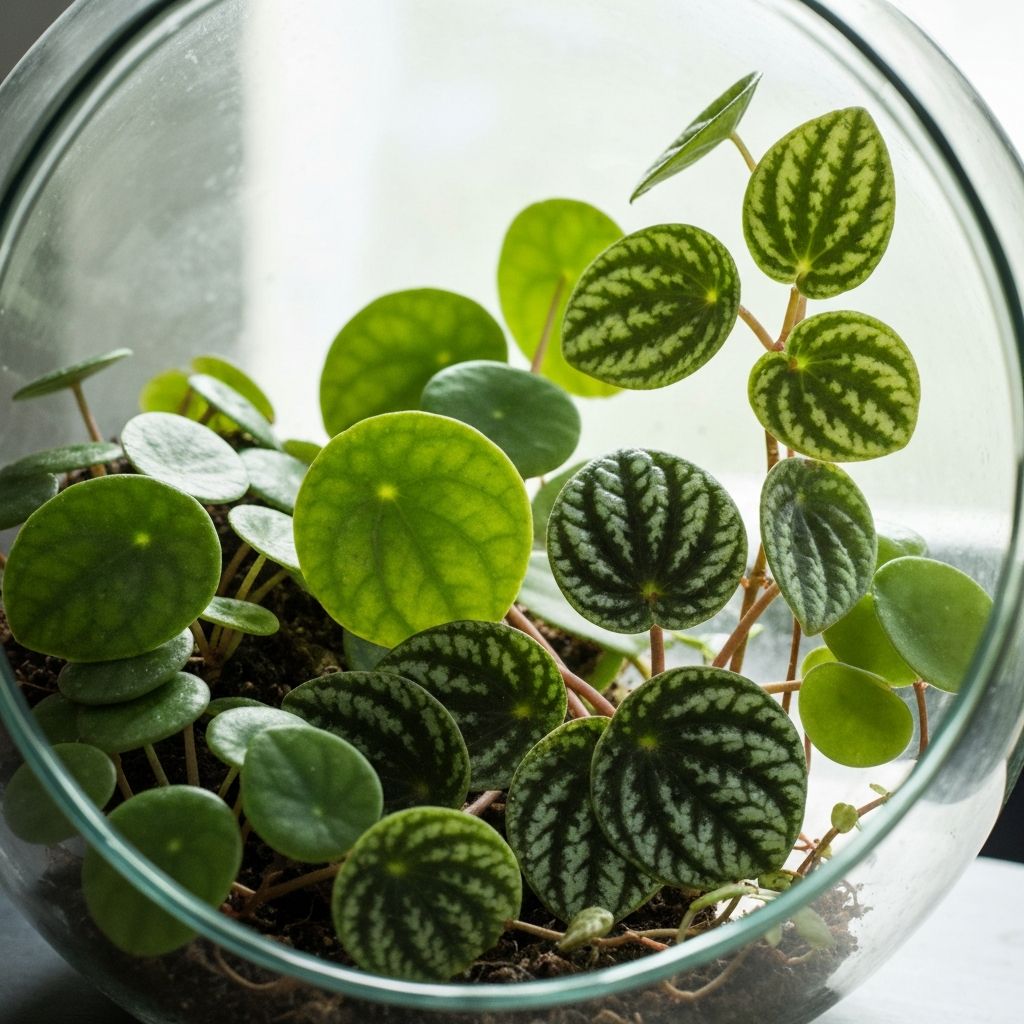
Peperomia is an underrated terrarium genus. With over 1,500 species offering incredible diversity in leaf shape, color, and growth habit, there's a peperomia for every terrarium style. These compact plants thrive in humid conditions and rarely outgrow their space.
Why Peperomia Works in Terrariums
Peperomia evolved in tropical forest understories, growing on forest floors and tree branches. This gives them traits that suit terrarium life:
- Humidity tolerance: Happy in 60-90% humidity
- Low light adaptation: Don't need direct sun
- Compact growth: Most stay under 8 inches
- Semi-succulent leaves: Tolerate occasional moisture fluctuations
- Slow growth: Won't overtake containers quickly
Best Varieties for Terrariums
Peperomia prostrata (String of Turtles)
Appearance: Tiny round leaves with turtle shell patterns on trailing stems
Size: Trails to 12+ inches but can be trimmed
Why it works: Perfect for draping over terrarium edges or rocks
Placement: Foreground or cascading from elevated positions
Care notes: Slightly more drought-tolerant than other peperomias; don't overwater
Peperomia rotundifolia (Trailing Jade)
Appearance: Small, round, succulent leaves on delicate trailing stems
Size: Trails indefinitely but stays small in diameter
Why it works: Creates ground cover or living curtain effect
Placement: Around base of taller plants or trailing from sides
Care notes: Easy and forgiving; handles variety of conditions
Peperomia caperata (Ripple Peperomia)
Appearance: Deeply ridged, heart-shaped leaves; available in green, red, and silver varieties
Size: 4-6 inches tall and wide
Why it works: Adds texture unlike any other terrarium plant
Placement: Midground focal point
Care notes: Prefers higher humidity; excellent closed terrarium plant
Peperomia angulata (Beetle Peperomia)
Appearance: Striped oval leaves on trailing stems
Size: Compact trailing habit
Why it works: Striped pattern adds visual interest without bright colors
Placement: Ground cover or trailing accent
Care notes: Slightly less common but easy to care for
Peperomia pepperspot
Appearance: Tiny round leaves, similar to prostrata but without patterning
Size: Delicate trailing stems
Why it works: Fine texture creates fairy-garden scale
Placement: Ground cover in small terrariums
Care notes: Keep humidity consistent; dries out quickly
Peperomia rubella
Appearance: Small leaves, red undersides, compact upright growth
Size: 4-6 inches
Why it works: Adds red accent color without flowers
Placement: Midground or foreground
Care notes: Easy; appreciates bright indirect light for best color
Peperomia puteolata (Parallel Peperomia)
Appearance: Long leaves with parallel stripes, upright growth
Size: 8-12 inches (larger for terrariums)
Why it works: Architectural shape contrasts with mounding plants
Placement: Background in larger terrariums only
Care notes: May need occasional trimming; roots easily from cuttings
Peperomia 'Hope'
Appearance: Round succulent leaves on trailing stems; hybrid variety
Size: Compact trailing
Why it works: Easier than string of turtles with similar effect
Placement: Trailing or ground cover
Care notes: More tolerant of variable conditions than species varieties
Care Requirements
Light
Peperomia prefer medium to bright indirect light. In terrariums:
- Avoid placing near glass where direct sun creates hot spots
- North or east-facing window placement works well
- Variegated varieties need more light to maintain patterns
Too little light causes stretching and loss of variegation. Too much causes fading and potential burn.
Humidity
Ideal: 60-80%
Most closed terrariums naturally maintain this range. Peperomia tolerate lower humidity better than many terrarium plants, making them suitable for semi-open containers.
Watering
Peperomia store water in their semi-succulent leaves. They prefer:
- Soil that dries slightly between waterings
- No standing water on leaves
- Less water than ferns or moss
In sealed terrariums, peperomia often need no additional watering after setup. Watch for wrinkled leaves as a sign of underwatering.
Soil
Standard terrarium mix works well:
- 2 parts peat or coco coir potting mix
- 1 part perlite for drainage
Peperomia tolerate various soil types as long as drainage is adequate.
Temperature
65-80°F (18-27°C) is ideal. Peperomia are sensitive to cold:
- Keep above 55°F
- Avoid cold drafts
- Don't place against cold windows in winter
Propagation
Peperomia propagate easily, useful for filling in terrariums or sharing plants.
Stem Cuttings
For trailing varieties:
- Cut stem sections with 2-3 nodes
- Remove lower leaves
- Place in moist terrarium soil
- Keep humidity high
- Roots develop in 2-4 weeks
Leaf Cuttings
For varieties with thick leaves (caperata, etc.):
- Cut healthy leaf with petiole
- Insert petiole into moist soil at angle
- Maintain high humidity
- New plants emerge from base in 4-8 weeks
Common Problems
Dropping Leaves
Cause: Usually overwatering or sudden temperature change
Solution: Let soil dry more; check for root rot; stabilize temperature
Mushy Stems
Cause: Overwatering leading to stem rot
Solution: Remove affected portions; reduce watering; may need to propagate from healthy sections
Loss of Variegation
Cause: Insufficient light
Solution: Move to brighter indirect light; new growth should show better color
Stretchy, Leggy Growth
Cause: Not enough light
Solution: Increase light levels; trim stretched portions; cuttings can be replanted
Slow Growth
Cause: Normal for peperomia; may indicate low temperature or light
Solution: Often not a problem; check conditions if concerning
Design Ideas
Textured Trio
Combine:
- Peperomia caperata (ridged texture)
- Peperomia rotundifolia (smooth trailing)
- Mood moss (fuzzy texture)
Three distinct textures create visual interest without competing colors.
Cascading Terrarium
Use trailing peperomias:
- String of turtles from back
- Trailing jade from middle
- Pepperspot as ground cover
Create layers of trailing foliage for waterfall effect.
Miniature Forest Floor
Combine with:
- Sheet moss as ground cover
- Small fern as canopy
- Peperomia prostrata threading through
Recreates natural forest floor ecosystem.
Companion Plants
Peperomia pairs well with:
- Fittonia: Similar humidity needs, contrasting patterns
- Moss varieties: Creates scale and texture contrast
- Small ferns: Complementary growth habits
- Selaginella: Fine texture against peperomia's solid leaves
- Pilea: Similar care needs, different leaf shapes
Avoid pairing with:
- Succulents (different moisture needs)
- Fast-growing plants that will overtake
- Plants requiring much brighter light
Sourcing Peperomia
Garden Centers
Common varieties like caperata often available. Selection may be limited.
Online Specialty Shops
Better variety selection. Etsy sellers often have rare species.
Plant Swaps
Peperomia propagates easily; community swaps are great sources for cuttings.
Big Box Stores
Occasionally stock peperomia, usually basic varieties at low prices.
Final Thoughts
Peperomia offers terrarium builders incredible versatility. From trailing strings of turtles to textured ripple varieties, there's a peperomia for any design concept.
Start with easy varieties like rotundifolia or caperata. As you gain confidence, explore rarer species that add unique character to your enclosed gardens. The genus rewards exploration with an endless variety of forms and patterns.
Tags
Written by
Sarah Chen
A contributing writer at Terrarium Guide. Our team is dedicated to providing well-researched, accurate, and helpful content to our readers.
Learn more about our teamRelated Articles
Pilea Species for Terrariums: Beyond the Money Plant
Explore compact pilea varieties perfect for terrariums, from the aluminum plant to creeping charlie, with care tips for each.
Fittonia Care Guide: Growing Nerve Plants in Terrariums
Everything you need to know about growing fittonia (nerve plants) in terrariums, including variety selection, care requirements, and troubleshooting common problems.

The 8 Best Ferns for Terrariums: A Complete Species Guide
Discover which fern species thrive in terrarium environments. Learn about size, care requirements, and placement tips for maidenhair, button, lemon button, and other terrarium-friendly ferns.