Pilea Species for Terrariums: Beyond the Money Plant
Explore compact pilea varieties perfect for terrariums, from the aluminum plant to creeping charlie, with care tips for each.
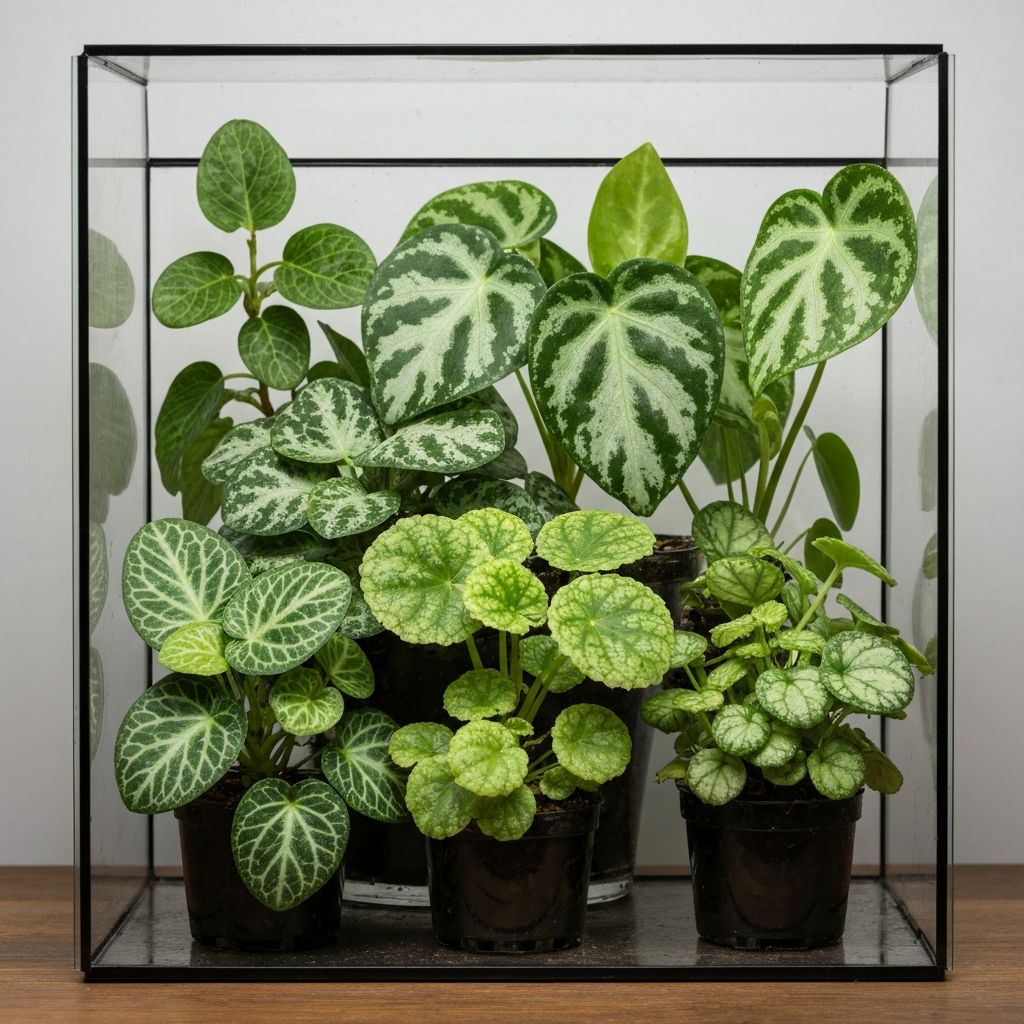
When most people think of pilea, they picture the trendy Pilea peperomioides (Chinese money plant). But that popular species grows too large for most terrariums. The pilea genus offers dozens of compact, humidity-loving species that thrive in enclosed environments.
Why Pilea Works in Terrariums
Pilea species share traits that suit terrarium life:
- Native to tropical forests worldwide
- Prefer humidity over dry air
- Tolerate low to medium light
- Most stay compact or trail
- Easy to propagate
Best Pilea for Terrariums
Pilea involucrata (Friendship Plant)
Appearance: Deeply textured, quilted leaves in bronze-green with dark veins
Size: 6-8 inches tall, spreading habit
Why it works: Stunning texture, stays compact, multiplies freely
Care notes: Prefers higher humidity; leaves lose texture in dry conditions
Pilea cadierei (Aluminum Plant)
Appearance: Dark green leaves with raised silver markings that look metallic
Size: 6-12 inches, can be kept smaller with pruning
Why it works: The silver variegation catches light beautifully
Care notes: Pinch regularly to maintain bushiness; tolerates varied conditions
Pilea glauca (Silver Sparkle, Grey Baby Tears)
Appearance: Tiny gray-green leaves on delicate trailing stems
Size: Trailing to 12+ inches
Why it works: Perfect ground cover or trailing accent
Care notes: Needs consistent moisture; dries out quickly if exposed
Pilea microphylla (Artillery Plant)
Appearance: Tiny fern-like leaves, fine texture
Size: 6-12 inches
Why it works: Unique texture unlike typical terrarium plants
Care notes: Named for how it shoots pollen; this won't affect terrariums
Pilea nummulariifolia (Creeping Charlie)
Appearance: Round, scalloped leaves on trailing stems
Size: Low growing, trails 12+ inches
Why it works: Excellent cascading plant for terrarium edges
Care notes: Can become vigorous; trim as needed
Pilea depressa (Baby Tears Pilea)
Appearance: Tiny round leaves creating dense mat
Size: Very low, ground-hugging
Why it works: Perfect living carpet, smaller than Soleirolia
Care notes: Needs consistent moisture and humidity
Pilea 'Moon Valley'
Appearance: Deeply textured chartreuse leaves with dark veins
Size: 6-10 inches
Why it works: Bright color lightens terrariums
Care notes: Needs more light than darker varieties for best color
Care Requirements
Light
Most pilea prefer medium indirect light. In terrariums:
- Avoid placing against glass where light concentrates
- Silver and variegated types need more light
- Dark green types tolerate lower light
Humidity
Ideal: 60-80%
Pilea's preference for humidity is why they often fail as regular houseplants but thrive in terrariums. The enclosed environment provides what they need.
Water
Keep soil consistently moist but not waterlogged. Pilea dislike:
- Completely dry soil
- Standing water
- Cold water on leaves
Temperature
65-75°F (18-24°C) is ideal. Avoid cold drafts and sudden temperature changes.
Propagation
Pilea propagate easily, useful for filling in terrarium gaps.
Stem Cuttings
- Cut 2-3 inch stem sections with leaves
- Remove lower leaves
- Plant directly in moist terrarium soil
- Roots develop in 2-3 weeks
Division
Larger pilea form multiple stems from the base:
- Remove entire plant
- Gently separate stems with roots attached
- Replant divisions
Runners (Trailing Types)
Trailing pilea root at nodes:
- Pin trailing stem to soil with small wire
- Once rooted, cut from parent
- New plant establishes independently
Design Ideas
Textured Trio
Combine three textures:
- Pilea involucrata (quilted)
- Pilea microphylla (fern-like)
- Sheet moss (fuzzy)
Silver Theme
Play with silver tones:
- Pilea cadierei
- Pilea glauca
- Fittonia with white veins
Cascading Layers
Create depth with trailers:
- Background: Pilea Moon Valley (upright)
- Midground: Pilea involucrata
- Foreground: Pilea glauca trailing over edge
Common Problems
Leggy Growth
Cause: Insufficient light Solution: Move to brighter location; pinch stems to encourage bushiness
Leaf Drop
Cause: Overwatering, underwatering, or cold drafts Solution: Check soil moisture; stabilize conditions
Loss of Texture/Color
Cause: Usually too little light Solution: Increase light gradually
Brown Leaf Edges
Cause: Low humidity or inconsistent watering Solution: Terrariums usually prevent this; check seal
Companion Plants
Pilea pairs well with:
- Fittonia: Similar care, contrasting patterns
- Moss varieties: Pilea stands above moss carpet
- Small ferns: Complementary textures
- Peperomia: Similar needs, different forms
Avoid pairing with plants needing dry conditions.
Where to Find
Common Varieties
Garden centers often stock:
- Aluminum plant
- Friendship plant
- Moon Valley
Specialty Varieties
For rarer types:
- Online terrarium suppliers
- Etsy sellers
- Plant collector groups
- Specialty nurseries
Final Thoughts
Pilea offers terrarium builders a range of textures, colors, and growth habits beyond the typical fern-and-moss combination. The genus is underutilized in terrarium design, perhaps because the popular peperomioides overshadows its smaller cousins.
Start with forgiving varieties like Pilea glauca or aluminum plant. These adapt well to terrarium conditions and provide a foundation for exploring more demanding species.
Tags
Written by
Sarah Chen
A contributing writer at Terrarium Guide. Our team is dedicated to providing well-researched, accurate, and helpful content to our readers.
Learn more about our teamRelated Articles
Peperomia Varieties Perfect for Terrariums
Discover the best compact peperomia species for terrariums, including care requirements, growth habits, and styling tips.
Fittonia Care Guide: Growing Nerve Plants in Terrariums
Everything you need to know about growing fittonia (nerve plants) in terrariums, including variety selection, care requirements, and troubleshooting common problems.
The 8 Best Ferns for Terrariums: A Complete Species Guide
Discover which fern species thrive in terrarium environments. Learn about size, care requirements, and placement tips for maidenhair, button, lemon button, and other terrarium-friendly ferns.