Jewel Orchids: The Perfect Terrarium Statement Plant
Jewel orchids are grown for their stunning foliage, not flowers, making them ideal terrarium specimens. Learn about species selection, care, and propagation.
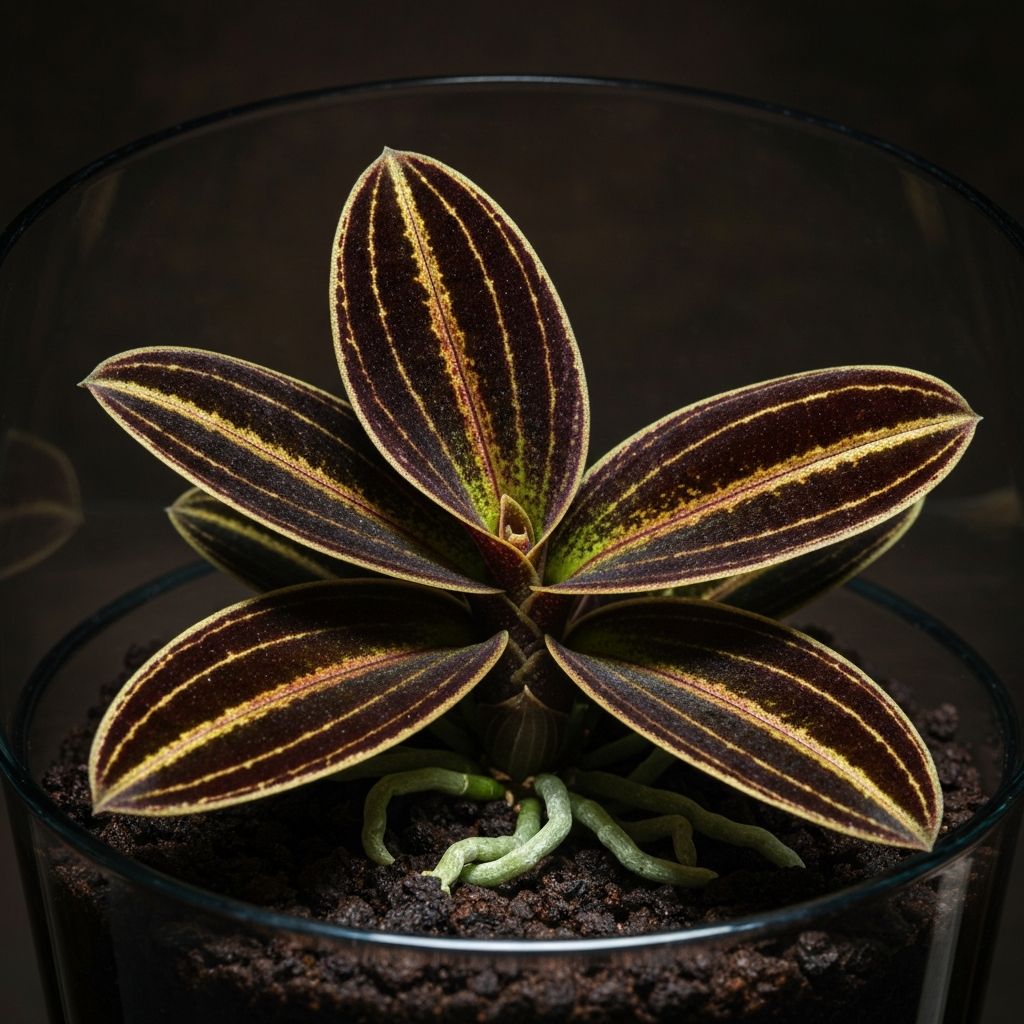
While most orchids are prized for their flowers, jewel orchids flip the script. These terrestrial orchids feature velvety leaves with intricate patterns of gold, silver, copper, and red veining that shimmer like precious metal. Better yet, they thrive in the low-light, high-humidity conditions that terrariums provide.
What Makes Jewel Orchids Special
Foliage Over Flowers
Jewel orchids produce small white flowers, but these are almost an afterthought. The real attraction is the foliage:
- Velvety, soft texture
- Metallic veining that catches light
- Deep green to nearly black base colors
- Patterns unique to each species
Terrarium Adaptation
Unlike their epiphytic cousins, jewel orchids are terrestrial, growing on forest floors in:
- Low light conditions
- Consistently humid environments
- Well-draining but moist substrate
- Stable temperatures
These conditions match terrariums perfectly.
Popular Species
Macodes petola (Lightning Jewel Orchid)
The most recognizable jewel orchid.
Characteristics:
- Electric yellow-gold veining
- Lightning bolt patterns
- Dark green leaves
- Size: 4-8 inches tall
Care notes:
- Moderate humidity (60%+)
- Low to medium light
- Keep moist but not wet
- Moderate difficulty
Why it is loved: The gold veining appears to glow, creating a striking focal point.
Ludisia discolor (Black Jewel Orchid)
The easiest jewel orchid for beginners.
Characteristics:
- Dark burgundy to black leaves
- Pink to red pinstripe veining
- Produces white flower spikes readily
- Size: 6-10 inches tall
Varieties:
- 'Alba' - Green leaves with white veins
- 'Nigrescens' - Nearly black leaves
- 'Red Velvet' - Intense red coloring
Care notes:
- Very forgiving
- Tolerates lower humidity
- Handles varied light
- Good for beginners
Why it is loved: Beautiful, affordable, and nearly indestructible.
Anoectochilus species
Intricate patterning that looks hand-painted.
Notable species:
- A. formosanus - Gold network pattern
- A. chapaensis - Pink and gold veining
- A. roxburghii - Silver-green patterns
Characteristics:
- Smaller than other jewel orchids (2-4 inches)
- Complex, detailed patterns
- Often more challenging
- Highly collectible
Care notes:
- High humidity required (70%+)
- Low light preferred
- Excellent drainage essential
- Intermediate to advanced
Dossinia marmorata
Marble-like gold patterns on olive leaves.
Characteristics:
- Gold marbling effect
- Olive-green base color
- Medium size (4-6 inches)
- Slow growing
Care notes:
- High humidity
- Low light
- Keep evenly moist
- Moderate difficulty
Goodyera species
The most cold-tolerant jewel orchids.
Notable species:
- G. pubescens - Rattlesnake plantain (native)
- G. schlechtendaliana - Silver veining
Characteristics:
- White or silver veining
- More subtle than tropical species
- Some are temperate climate native
- Very hardy
Care notes:
- Tolerates cooler temps
- Lower humidity acceptable
- Can grow outdoors in some climates
- Easy to grow
Hybrid Jewel Orchids
Modern hybrids combine the best traits:
Examples:
- Macodes x Anoectochilus crosses
- Ludisia x Macodes hybrids
- Selected for vigor and pattern intensity
Advantages:
- Often more forgiving than species
- Unique pattern combinations
- Better terrarium adaptation
- Increasingly available
Growing Conditions
Light
Jewel orchids prefer dim conditions:
- Low to medium indirect light
- Never direct sunlight
- 800-1500 lux ideal
- North windows work well
- Grow lights at low intensity
Signs of too much light:
- Faded patterns
- Bleached or yellowing leaves
- Crispy edges
- Loss of velvety texture
Humidity
Most species need elevated humidity:
- Minimum: 50-60%
- Ideal: 70-80%
- Terrariums provide perfect conditions
- Misting helps in open containers
Temperature
Tropical species prefer warmth:
- Day: 70-80°F (21-27°C)
- Night: 60-70°F (15-21°C)
- Avoid below 55°F (13°C)
- No tolerance for frost
Substrate
Jewel orchids need excellent drainage:
Recommended mix:
- 2 parts orchid bark (fine grade)
- 2 parts perlite
- 1 part sphagnum moss
- 1 part potting soil (optional)
Alternative:
- Pure sphagnum moss (requires careful watering)
- Premixed aroid soil
- Fluval Stratum (aquarium soil)
Key points:
- Never use dense, water-retentive soil
- Must drain quickly
- Should stay moist, not wet
- Repot every 1-2 years
Watering
Balance is crucial:
- Keep evenly moist
- Never waterlogged
- Never bone dry
- Water when surface just begins to dry
- Use room temperature water
Terrarium Placement
Positioning
Best locations:
- Mid-ground to foreground
- Slightly elevated if possible
- Away from glass edges
- Where patterns are visible
Avoid:
- Directly against wet glass
- Under dripping condensation
- In standing water
- Dark corners (yes, they need some light)
Companion Plants
Jewel orchids pair well with:
- Ferns (similar conditions)
- Moss (ground cover)
- Peperomia (similar scale)
- Selaginella (compatible humidity)
- Other jewel orchids (collector display)
Avoid combining with:
- Succulents (different water needs)
- Sun-loving plants
- Aggressive spreaders
- Very large plants that overshadow
Propagation
Jewel orchids propagate easily, which is good because they can be expensive.
Stem Cuttings
The most reliable method:
- Select healthy stem with 2-3 nodes
- Cut below a node with sterile blade
- Remove lower leaves
- Optional: Apply rooting hormone
- Place in moist sphagnum or water
- Keep humid and warm
- Roots appear in 2-4 weeks
Water rooting:
- Place cutting in pure water
- Change water every few days
- Transfer to substrate when roots are 1-2 inches
- High success rate
Division
For mature, multi-stem plants:
- Remove from pot
- Gently separate stems
- Ensure each division has roots
- Pot individually
- Maintain high humidity while establishing
Keiki (Plantlets)
Some species produce plantlets:
- Wait until keiki has roots
- Separate from mother plant
- Pot in appropriate substrate
- Treat as cutting until established
Common Problems
Leggy Growth
Stems stretching with sparse leaves.
Cause: Insufficient light
Solution:
- Move to brighter location
- Add supplemental lighting
- Take cuttings from leggy stems
- New growth will be more compact
Yellowing Leaves
Lower leaves turning yellow and dropping.
Causes:
- Normal aging (bottom leaves)
- Overwatering
- Poor drainage
Solutions:
- Accept if just older leaves
- Reduce watering
- Improve substrate drainage
Root Rot
Mushy, brown roots, declining plant.
Cause: Overwatering, poor drainage
Solution:
- Remove from substrate
- Trim dead roots
- Repot in fresh, well-draining mix
- Reduce watering frequency
- Take cuttings if severe
Crispy Leaf Tips
Brown, dry leaf edges.
Causes:
- Low humidity
- Mineral buildup from water
- Too much light
Solutions:
- Increase humidity
- Use distilled or rainwater
- Move to lower light
Pest Issues
Common pests:
Mealybugs:
- White cottony masses
- Treat with isopropyl alcohol
- Isolate affected plants
Scale:
- Brown bumps on stems/leaves
- Scrape off manually
- Treat with neem oil
Spider mites:
- Fine webbing, stippled leaves
- Increase humidity
- Treat with insecticidal soap
Design Ideas
Collector's Display
Showcase multiple species:
- Group different jewel orchids together
- Vary heights and patterns
- Use neutral background to emphasize foliage
- Single statement container
Forest Understory
Recreate natural habitat:
- Pair with ferns and moss
- Add bark and branches
- Create dappled light effect
- Include leaf litter
Modern Minimalist
Highlight individual specimens:
- Single plant in geometric container
- White or black background
- Clean substrate surface
- Architectural presentation
Where to Buy
Specialty orchid nurseries:
- Best selection
- Healthy, established plants
- Species accurately identified
- Higher prices
Online vendors:
- Wider variety
- Variable quality
- Read reviews carefully
- Import permits may be needed
Plant swaps and societies:
- Affordable cuttings
- Advice from experienced growers
- Local adaptation
- Community connection
Avoid:
- Big box stores (limited selection, poor care)
- Unnamed or mislabeled plants
- Wild-collected specimens
Conclusion
Jewel orchids offer everything a terrarium enthusiast could want: stunning visual impact, perfect adaptation to terrarium conditions, easy propagation, and endless variety. Start with the forgiving Ludisia discolor to learn their needs, then explore the dazzling world of Macodes, Anoectochilus, and other genera. Once you see a Macodes petola catching the light, its gold veining glowing like actual metal, you will understand why collectors become obsessed with these remarkable plants.
Tags
Written by
Sarah Chen
A contributing writer at Terrarium Guide. Our team is dedicated to providing well-researched, accurate, and helpful content to our readers.
Learn more about our teamRelated Articles
12 Best Moss Varieties for Terrariums
A complete guide to the most beautiful and easy-to-grow moss species for terrariums, including care tips, sourcing advice, and placement recommendations.
Fittonia Care Guide: Growing Nerve Plants in Terrariums
Everything you need to know about growing fittonia (nerve plants) in terrariums, including variety selection, care requirements, and troubleshooting common problems.
Selaginella Species: The Perfect Terrarium Ground Cover
Selaginella, or spike moss, creates lush carpets in terrariums. Learn about the best species, care requirements, and propagation techniques.