Live vs Dried Sphagnum Moss: Which Should You Use?
Understanding the differences between living and dried sphagnum moss for terrariums, including when to use each and how to keep live sphagnum thriving.
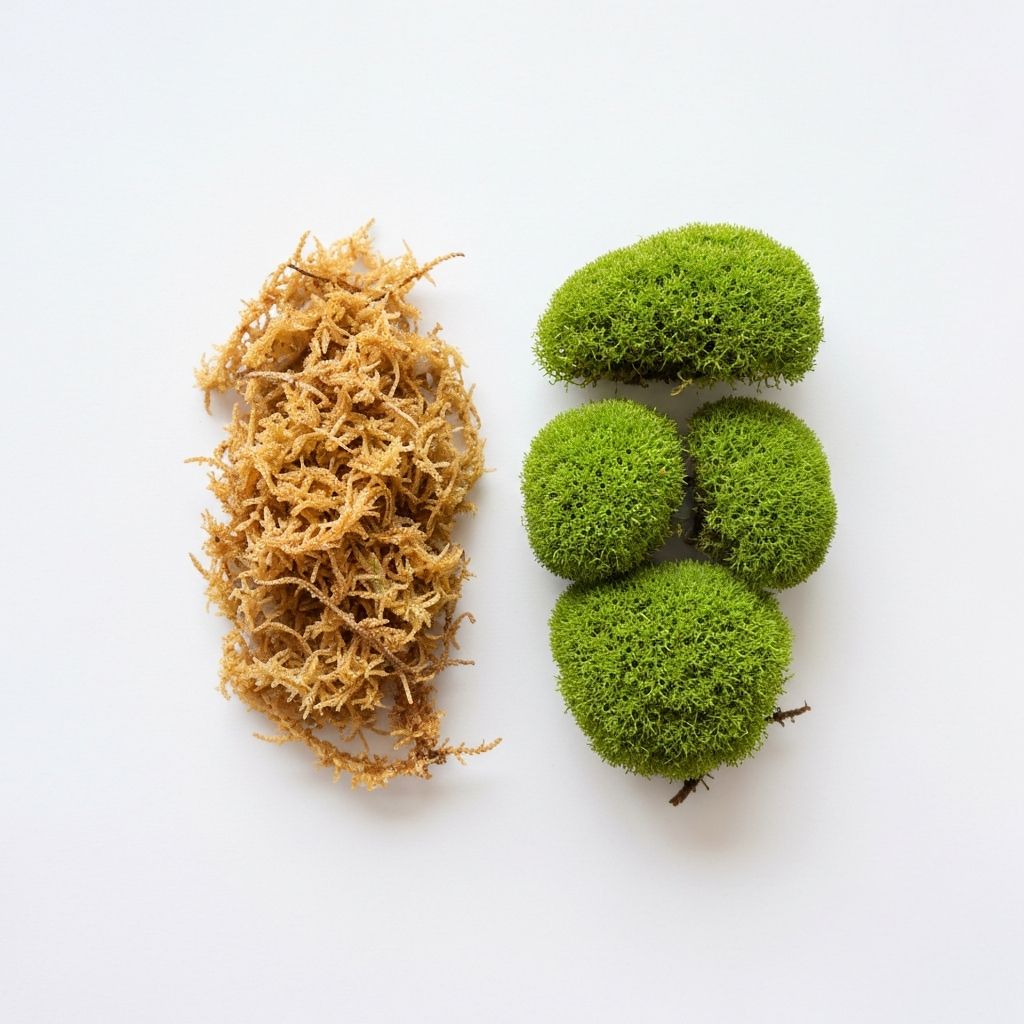
Sphagnum moss appears in nearly every terrarium supply list, but the term causes confusion. Are we talking about the fluffy dried material from garden centers, or the living green moss that grows in bogs? Both have their place in terrarium building, and understanding the difference helps you choose correctly.
Understanding Sphagnum
What Is Sphagnum?
Sphagnum is a genus of approximately 380 moss species found worldwide, primarily in wetland environments. These mosses have remarkable properties:
- Hold up to 20 times their dry weight in water
- Create acidic conditions (pH 4-5)
- Naturally antimicrobial
- Decompose extremely slowly
The Two Forms
Dried sphagnum moss:
- Harvested, dried, and packaged
- Tan to light brown color
- Sold compressed in bags
- Long-fiber and short-fiber varieties
Live sphagnum moss:
- Actively growing moss
- Green, red, or golden depending on species
- Sold in clumps or mats
- Continues to grow in proper conditions
Dried Sphagnum Moss
Best Uses
Dried sphagnum excels as a functional material:
Substrate component:
- Mix with peat for carnivorous plants
- Wrap around orchid roots
- Create moisture-retaining pockets
Moisture barrier:
- Layer between drainage and soil
- Prevents soil from falling into rocks
- Maintains separation between layers
Planting medium:
- Wrap roots when mounting plants
- Secure air plants to branches
- Start cuttings and divisions
Decorative covering:
- Hide soil surface
- Create natural-looking ground
- Fill gaps between plants
Advantages of Dried
- Inexpensive and widely available
- Long shelf life
- No special care needed
- Consistent quality
- Easy to work with
Limitations
- Does not grow or spread
- Eventually decomposes (1-2 years)
- Can harbor dormant pests if not sterilized
- Less visually interesting than living moss
Preparing Dried Sphagnum
Before use, always rehydrate:
- Place in container of water
- Soak for 15-30 minutes
- Squeeze out excess water
- Fluff to separate fibers
- Use immediately or store damp
Optional sterilization:
- Microwave damp moss for 2 minutes
- Or pour boiling water over it
- Let cool before use
- Eliminates pests and fungi
Live Sphagnum Moss
Best Uses
Living sphagnum serves both functional and aesthetic purposes:
Living ground cover:
- Creates lush, natural appearance
- Actively grows and spreads
- Self-maintaining once established
- Works as indicator of terrarium health
Humidity regulation:
- Absorbs excess moisture
- Releases humidity when dry
- Buffers environmental changes
- Natural climate control
Companion planting:
- Perfect for carnivorous plants
- Pairs well with orchids
- Supports seedling germination
- Creates microhabitats
Advantages of Live
- Visually stunning
- Self-sustaining in right conditions
- Indicates terrarium health
- Creates authentic bog/forest aesthetic
- Grows to fill spaces naturally
Challenges
- Requires specific conditions
- More expensive and harder to source
- Can die if conditions are wrong
- May overgrow other plants
- Some species are challenging
Growing Live Sphagnum
Conditions Required
Live sphagnum has specific needs:
Water:
- Must be pure (distilled, RO, or rain)
- Keep consistently moist
- Never let dry completely
- Tolerates sitting in water
Light:
- Moderate to bright indirect
- Some species tolerate lower light
- Too much direct sun causes bleaching
- Too little causes sparse growth
Humidity:
- Minimum 60%
- Ideal 70-90%
- Closed terrariums work well
- Mist frequently if open
Temperature:
- Most species: 60-80°F
- Cool-growing types: 50-70°F
- Avoid temperatures above 85°F
Starting from Dried
Yes, you can sometimes grow live sphagnum from dried:
- Use high-quality, minimally processed dried moss
- Place in shallow tray of distilled water
- Provide bright indirect light
- Cover to maintain humidity
- Wait 4-8 weeks for green growth
Success rate: Variable. Heavily processed commercial moss rarely regenerates. Lightly dried material from specialty suppliers works better.
Sourcing Live Sphagnum
Finding quality live sphagnum:
Specialty sellers:
- Carnivorous plant nurseries
- Terrarium supply companies
- Online moss vendors
- Higher quality, known species
Wild collection:
- Check local regulations first
- Harvest sustainably (small amounts)
- Quarantine before introducing
- May contain pests or unwanted species
Establishing in Your Terrarium
Method 1: Surface planting
- Prepare moist substrate
- Lay sphagnum pieces on surface
- Press gently to ensure contact
- Mist thoroughly
- Maintain high humidity
Method 2: Anchoring
- Use small pieces
- Pin to substrate with bent wire
- Or tuck between rocks
- Keep consistently moist
- Remove pins once rooted
Maintenance
Weekly:
- Check moisture level
- Mist if surface appears dry
- Ensure water quality
Monthly:
- Trim if overgrowing other plants
- Remove any brown/dead sections
- Propagate healthy pieces
Signs of problems:
- Browning = too dry or wrong water
- Yellowing = too much light
- Sparse growth = insufficient light
- White mold = too wet, poor circulation
Choosing Between Them
Use Dried Sphagnum When:
- Building drainage barriers
- Working with tight budgets
- Creating substrate mixes
- Needing large quantities
- Wrapping roots for mounting
- Starting with terrariums (simpler)
Use Live Sphagnum When:
- Creating bog or wetland scenes
- Growing carnivorous plants
- Wanting self-maintaining ground cover
- Prioritizing natural aesthetics
- Building display-quality terrariums
- Already have proper water source
Using Both Together
Many terrarium builders use both:
- Dried sphagnum as substrate barrier layer
- Live sphagnum as decorative top layer
- Dried for functional areas (under hardscape)
- Live for visible surfaces
Common Species
For Terrariums
Sphagnum cristatum:
- Deep green color
- Tolerates varied conditions
- Good for beginners
Sphagnum fallax:
- Golden-green tones
- Forms tight cushions
- Moderate difficulty
Sphagnum rubellum:
- Red coloration
- Striking appearance
- Needs cooler temperatures
Sphagnum papillosum:
- Robust growth
- Tolerates heat better
- Widely available
Species to Avoid
Some sphagnum grows too aggressively:
- Very fast-spreading species
- Those requiring specific conditions
- Anything you cannot positively identify
Ethical Considerations
Sustainability
Sphagnum bogs are ecologically important:
- Major carbon sinks
- Unique habitats
- Slow to regenerate
- Often legally protected
Responsible Sourcing
- Buy from nursery-propagated sources
- Avoid wild-harvested when possible
- Never collect from protected areas
- Support sustainable suppliers
- Use sparingly
Conclusion
Both dried and live sphagnum have valuable roles in terrarium building. Dried sphagnum is the practical workhorse, providing moisture retention and structural support. Live sphagnum transforms terrariums into living ecosystems, offering beauty and natural humidity regulation. Many successful terrarium builders use both, placing dried material where function matters and live moss where aesthetics count. Start with dried sphagnum to learn the basics, then experiment with live cultures once you have mastered maintaining consistent terrarium conditions.
Tags
Written by
Sarah Chen
A contributing writer at Terrarium Guide. Our team is dedicated to providing well-researched, accurate, and helpful content to our readers.
Learn more about our teamRelated Articles
Activated Charcoal in Terrariums: Essential or Optional?
Understand the role of activated charcoal in terrarium substrate, when you actually need it, and alternatives if you don't have it.

Best Glass Containers for Terrariums: A Buyer's Guide
From mason jars to geometric terrariums, learn which containers work best for different terrarium styles and budgets.
DIY Terrarium Lid Solutions for Any Container
Turn any glass container into a terrarium with these creative lid solutions. From cork to custom-cut glass, find the perfect closure for your build.