Terrarium Lighting: Natural vs. Artificial Light
Learn how to provide the right lighting for your terrarium, whether using natural window light or LED grow lights.
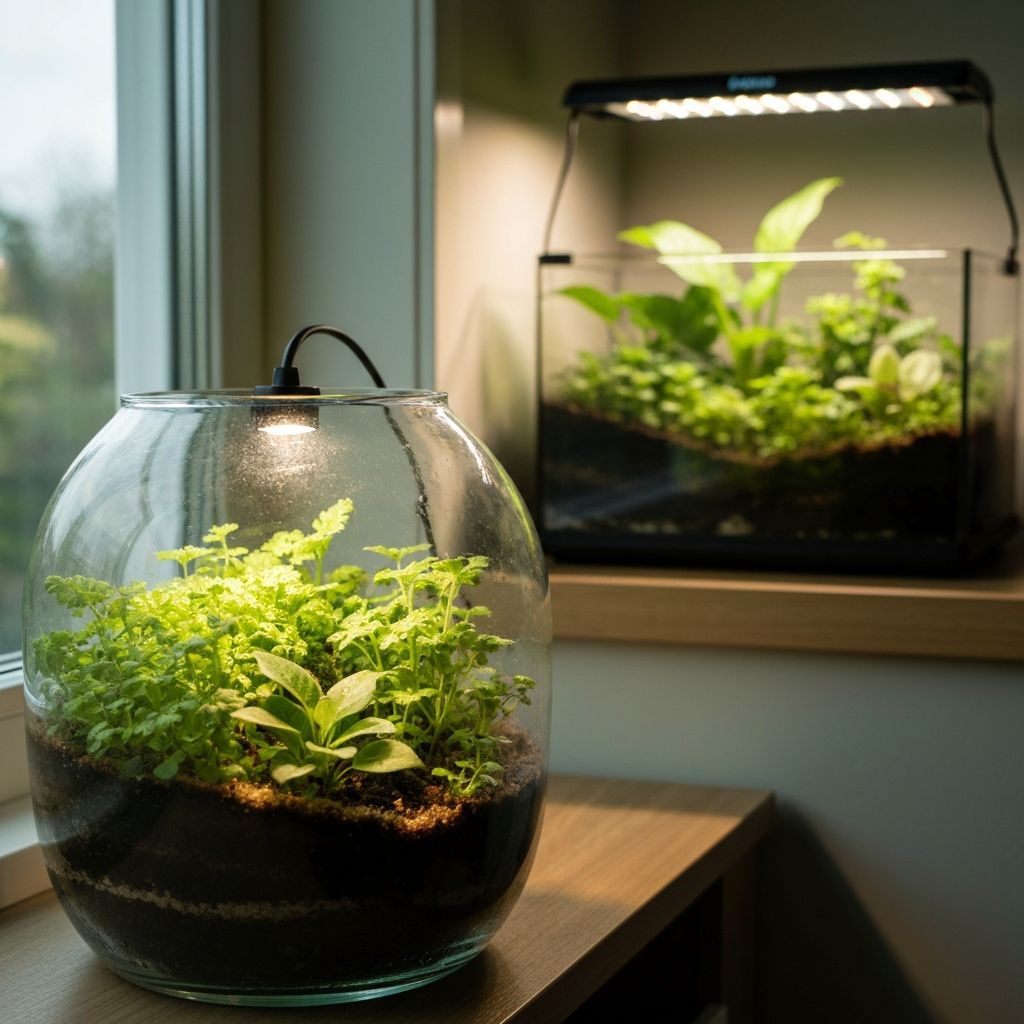
Light is the engine that powers your terrarium ecosystem. Without adequate light, photosynthesis fails, plants weaken, and your miniature garden declines. Understanding how to provide the right light, whether from the sun or artificial sources, is fundamental to terrarium success.
Light Requirements Basics
Most terrarium plants evolved in forest understories where light filters through tree canopy. They need:
- Bright but indirect light: No direct sun touching leaves
- Consistent duration: 8-12 hours daily
- Appropriate intensity: Moderate, not harsh
Direct sunlight through glass creates a greenhouse effect, rapidly overheating enclosed terrariums and cooking plants. Even plants that tolerate full sun outdoors often struggle with magnified heat through glass.
Natural Light
Ideal Natural Positions
North-facing windows (Northern Hemisphere):
- Gentle, consistent light all day
- No direct sun
- Perfect for most tropical terrariums
- May need supplemental light in winter
East-facing windows:
- Gentle morning sun
- Bright indirect light rest of day
- Excellent for most plants
- Watch for hot summer mornings
West-facing windows:
- Bright indirect morning
- Intense afternoon sun (problematic)
- Position terrarium away from direct rays
- Can work with sheer curtains
South-facing windows:
- Brightest exposure
- Direct sun most of day
- Usually too intense without intervention
- Keep terrariums 3-6 feet from window or use curtains
Seasonal Considerations
Natural light varies dramatically through the year:
Winter challenges:
- Shorter days reduce light duration
- Lower sun angle changes light quality
- May need supplemental lighting
- Plants grow slower, which is normal
Summer challenges:
- Longer, more intense days
- Higher risk of overheating
- May need to move terrarium away from windows
- Watch for signs of light stress
Signs of Light Problems
Too much light:
- Bleached or pale leaves
- Brown crispy patches
- Plants leaning away from light
- Rapid soil drying
- Overheating (warm glass)
Too little light:
- Stretchy, leggy growth
- Leaves smaller than normal
- Loss of variegation
- Pale, yellow-green color
- Slow or no new growth
Artificial Light
Artificial lighting solves many natural light problems: consistent intensity, controllable duration, year-round reliability.
Types of Grow Lights
LED Grow Lights
The current standard for terrarium lighting:
- Energy efficient
- Low heat output
- Long lifespan (50,000+ hours)
- Available in various spectrums
- Range from affordable to expensive
Fluorescent Lights
Older technology but still effective:
- T5 and T8 tubes work well
- More heat than LED
- Bulbs need periodic replacement
- Often cheaper upfront
- Good for larger setups
Full Spectrum vs. Purple/Pink Lights
Full spectrum (white) LEDs:
- Appear like natural light
- Better for displaying terrariums
- Modern full spectrum is highly effective
- Recommended for most home terrariums
Blurple (blue/red) LEDs:
- Optimized wavelengths for plant growth
- Purple/pink appearance is unattractive
- Can be more efficient per watt
- Better suited for grow tents than display
For terrariums, full spectrum white LEDs combine good plant growth with pleasant appearance.
Choosing LED Specifications
Wattage: For terrariums, 5-15 watts is typically sufficient. More watts equals more light, but excess can burn plants.
Color temperature: 5000-6500K mimics daylight and supports good growth. Some lights combine warm (3000K) and cool (6500K) for full spectrum.
PAR value: Photosynthetically Active Radiation measures useful light. Terrarium plants generally need 50-200 PAR. This information isn't always provided on consumer lights.
Light Fixture Options
Clamp lights:
- Affordable and adjustable
- Good for single terrariums
- Easy to reposition
- May look utilitarian
Light strips:
- Sleek, modern appearance
- Can be mounted under shelves
- Good for multiple terrariums
- Various lengths available
Desktop grow lamps:
- Designed for appearance
- Often adjustable necks
- Single plant or small terrarium focus
- Higher price for design
Built-in terrarium lights:
- Some containers include lighting
- Convenient all-in-one solution
- Limited upgrade options
- Often insufficient for plant needs
Installation Considerations
Height above terrarium: Start 8-12 inches above. Adjust based on plant response. Lower equals more light, higher equals less.
Duration: Set timer for 10-12 hours. Plants need a dark period; don't leave lights on 24/7.
Heat management: Even LEDs produce some heat. Ensure adequate airflow. Check glass temperature after lights run for several hours.
Combining Natural and Artificial Light
Many successful setups use both:
- Place terrarium near window for ambient natural light
- Add artificial light to supplement during dark hours or cloudy days
- Reduce artificial light in summer when natural light is abundant
- Increase artificial light in winter
This hybrid approach provides reliability while maintaining natural variation.
Light and Different Terrarium Types
Closed Tropical Terrariums
Requirements: Low to medium indirect light
Natural light: North or east windows ideal
Artificial: 8-12 hours at moderate intensity
Caution: Closed terrariums trap heat; avoid intense light sources
Open Succulent Terrariums
Requirements: Bright light, some direct sun acceptable
Natural light: South or west windows, direct morning sun OK
Artificial: Stronger lights closer to plants; 10-14 hours
Note: Can tolerate more intense light because open design dissipates heat
Moss Terrariums
Requirements: Low to medium indirect light
Natural light: North windows, shaded positions
Artificial: Lower intensity; 8-10 hours
Note: Moss prefers less light than most plants; too much causes browning
Setting Up a Light Schedule
Using Timers
Consistency matters more than hitting exact hours. Use a timer for reliable lighting:
- Choose your schedule (e.g., 7am-7pm)
- Set timer to turn lights on/off automatically
- Adjust seasonally if desired
- Don't manually override frequently
Seasonal Adjustments
Summer: Can reduce artificial light duration if natural light is abundant
Winter: May extend artificial light to compensate for shorter days
Spring/Fall: Standard 10-12 hour schedule works well
Troubleshooting Light Issues
Plants Still Stretching Under Grow Light
- Light may be too far away
- Light may be underpowered for your plants
- Duration may be too short
- Check bulb age (fluorescents dim over time)
Plants Bleaching Under Grow Light
- Light is too close
- Light is too intense
- Duration may be too long
- Try raising light or adding diffusion
Uneven Growth
- One side receives more light
- Rotate terrarium weekly
- Add additional light source
- Reposition for even exposure
Heat Buildup
- Light too close
- Enclosed space with poor ventilation
- Raise light height
- Add ventilation breaks
- Switch to cooler-running LED
Budget Options
Low Budget
- Position near appropriate window
- Use basic clamp light with LED bulb
- Basic timer from hardware store
- Total: $15-30
Mid Budget
- Purpose-built LED grow light
- Adjustable mounting
- Built-in timer
- Total: $40-80
Premium Setup
- High-quality full spectrum LED
- Smart timer with app control
- Professional mounting solution
- Total: $100+
Expensive lights aren't necessary for basic terrarium success. Many thriving terrariums use nothing more than a well-chosen window position.
Final Thoughts
Start with natural light if you have appropriate windows. It's free and provides excellent light quality. Add artificial lighting only if your space lacks adequate natural light or you want the reliability of controlled conditions.
Whatever your light source, observe your plants. They'll tell you through their growth whether light levels are appropriate. Stretching says "more light." Bleaching says "less light." Healthy compact growth says "just right."
Tags
Written by
Sarah Chen
A contributing writer at Terrarium Guide. Our team is dedicated to providing well-researched, accurate, and helpful content to our readers.
Learn more about our teamRelated Articles
Open vs Closed Terrariums: Which One Should You Build?
Understand the key differences between open and closed terrariums, including humidity levels, plant selection, and maintenance requirements to choose the right type for your space.
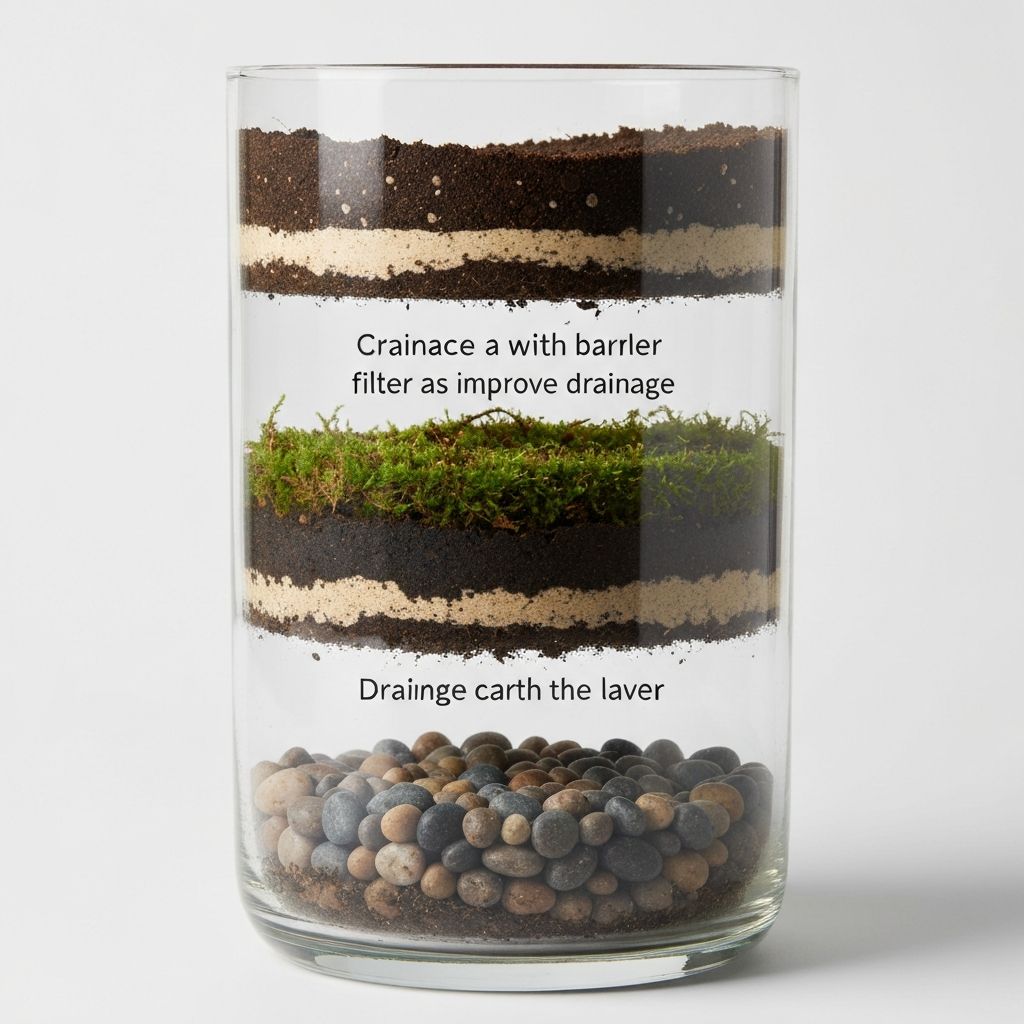
Terrarium Soil Layers Explained: The Complete Guide
Learn the purpose of each terrarium substrate layer, from drainage rocks to activated charcoal to soil, and how to build a foundation that keeps plants healthy.
How to Build Your First Closed Terrarium: A Complete Beginner Guide
Learn everything you need to create a self-sustaining closed terrarium. This step-by-step guide covers container selection, soil layers, plant choices, and maintenance tips for beginners.